
What's new
Sage X3 Cloud portal 1.7.0
-
FTP password expiration:
FTP user passwords can now be configured to expire after a defined period. When a password expires, the user must obtain a new password from an administrator before accessing FTP again.
By default and for already existing users, passwords expire after one month.
-
X3 services add-ons management from the Cloud Portal:
You can now build, activate, deactivate, and roll back X3 services add-ons directly from a dedicated X3 services builds tab. The portal also provides compatibility warnings and build logs to help you validate and troubleshoot add-ons.
-
Deployment history search:
You can now search deployment history entries by template, patch title, file name, tag, version, folder, or date to quickly find relevant records.
-
Improved deployment detail page refresh behavior:
The deployment detail page no longer refreshes automatically while an operation is in progress. The page now refreshes only when you select a tab or use the Refresh: action.
Sage X3 Cloud portal 1.6.0
-
Display the BI solution used by deployments:
Deployment pages now display the BI solution configured for each deployment.
The following enhancements have been added:
-
The deployment detail view displays the BI solution selected during provisioning in the BI integration tab.
-
A new BI tool column has been added to the deployment list.
-
Supported values are: SEI, ZAP, or None.
-
The Locale column has been removed from the deployment list to optimize space.
-
-
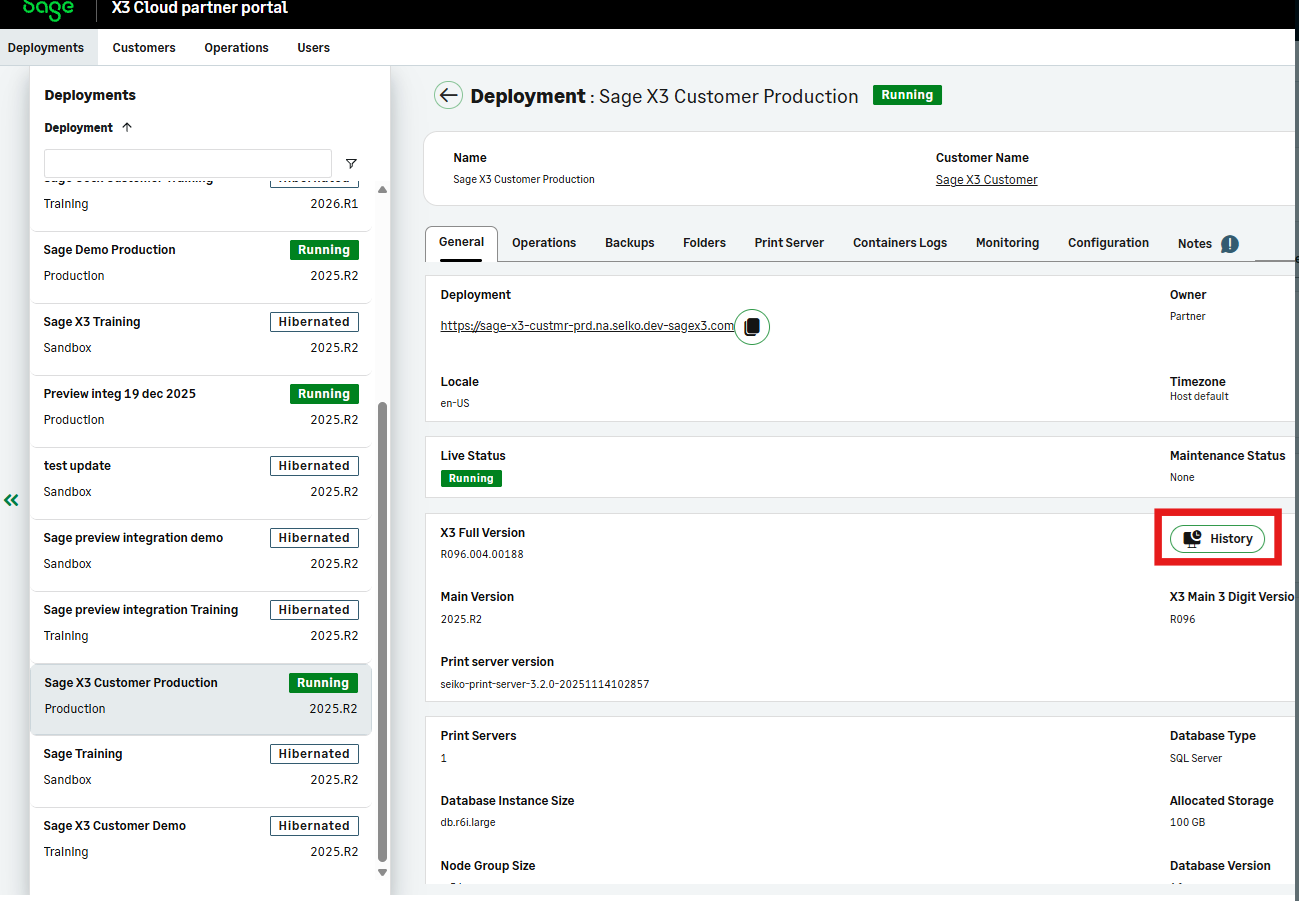
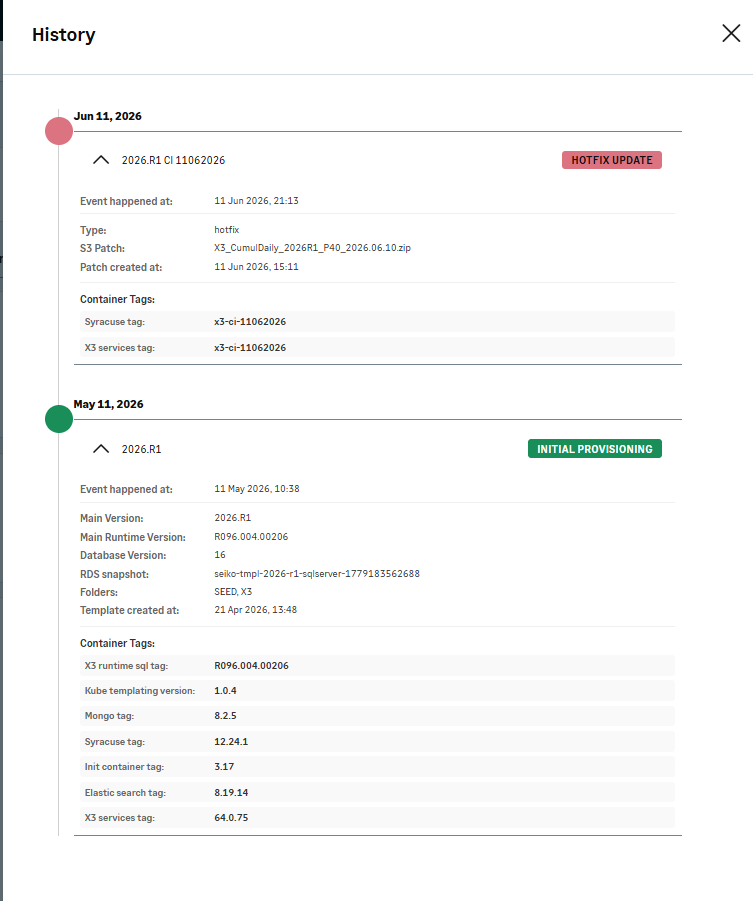
Display deployment history information:
Deployment pages now provide historical information to help track the deployment lifecycle over time.


The following information is now available:
-
Original provisioning template information
-
Deployment creation date
-
Applied patch information, including:
-
This historical information remains available even if the related templates or patches are deprecated or deleted.
-
-
Validate folder names:
Folder names that start with a number are now blocked.
This modification prevents X3 import errors caused by invalid folder names, such as 4Cad.
Sage X3 Cloud portal 1.5.0
-
Update your profile details directly in the portal:
Partners can now update their own profile information (such as name and language) without affecting their role, status, or email.
-
Enhanced Lead role:
The Lead role has been enhanced. Lead users now have broader permissions to manage users and customer access, while key administrative actions remain limited to Admins users.
-
Improved deployment page experience:
Deployment pages have been enhanced with clearer status indicators, additional tooltips, and better visibility of key actions.
-
Restrict user access to selected customers:
You can now limit a user’s access to a subset of customers. The user will only see the assigned customers and their associated deployments across the portal.
-
Enhanced FTP security with account lockout:
FTP user accounts are now locked out after repeated failed login attempts. Administrators can unlock users from the portal with a new password and audit trail.
Sage X3 Cloud portal 1.4.0
-
Create your X3 user from the Cloud Portal:
Available for deployments running X3 2026 R1 or later.
You can now create your own X3 user directly from the Cloud Portal using a new deployment action, without manual configuration in X3.
-
Print server settings configurable from the Cloud Portal:
You can now update print server settings per deployment, with validated ranges and persisted overrides, and apply changes through a controlled restart.
Available for both production and non‑production deployments.
Sage X3 Cloud portal 1.3.0
-
Improved folder import validation:
The system now prevents corrupted folder records by blocking imports where the SVG folder name is incorrect.
-
Privacy preferences available in Your profile:
You can now revisit and update previously approved consent settings directly from Your profile > Privacy preferences.
-
Localized welcome email and resend option:
Newly created partner users receive a localized welcome email. Administrators can resend the welcome email from the user actions menu.
-
Database access management for non-production deployments:
On non-production deployments, you can now activate or deactivate database access, retrieve or rotate credentials, and generate connection commands through our new interface.